If you carry more than one debt, you need an order to pay them in. There are two well-known answers, and the argument between them has been going for decades.
Avalanche: highest interest rate first
Pay minimums on everything, then throw every spare unit of currency at the debt with the highest interest rate. When it’s gone, roll that payment into the next-highest.
This is mathematically optimal. It minimizes total interest paid and, usually, total time to debt-free.
Snowball: smallest balance first
Same structure, different ordering — you attack the smallest balance regardless of rate, then roll into the next smallest.
This costs more in interest. It also has a meaningfully higher completion rate in practice, because you clear an entire debt early and the visible win keeps you going.
How to choose
Ask one question: have you abandoned a payoff plan before?
- No — use avalanche. You’ll finish, so take the cheaper path.
- Yes — use snowball. A slightly more expensive plan you complete beats an optimal plan you quit in month five.
Two adjustments worth making:
- If your highest-rate debt is also nearly your smallest, the two methods agree — just start there.
- If one debt has a rate far above the rest (a credit card at 30%+ against loans at 6%), take that one first regardless of method. The gap is too large to ignore for psychology’s sake.
The part both methods depend on
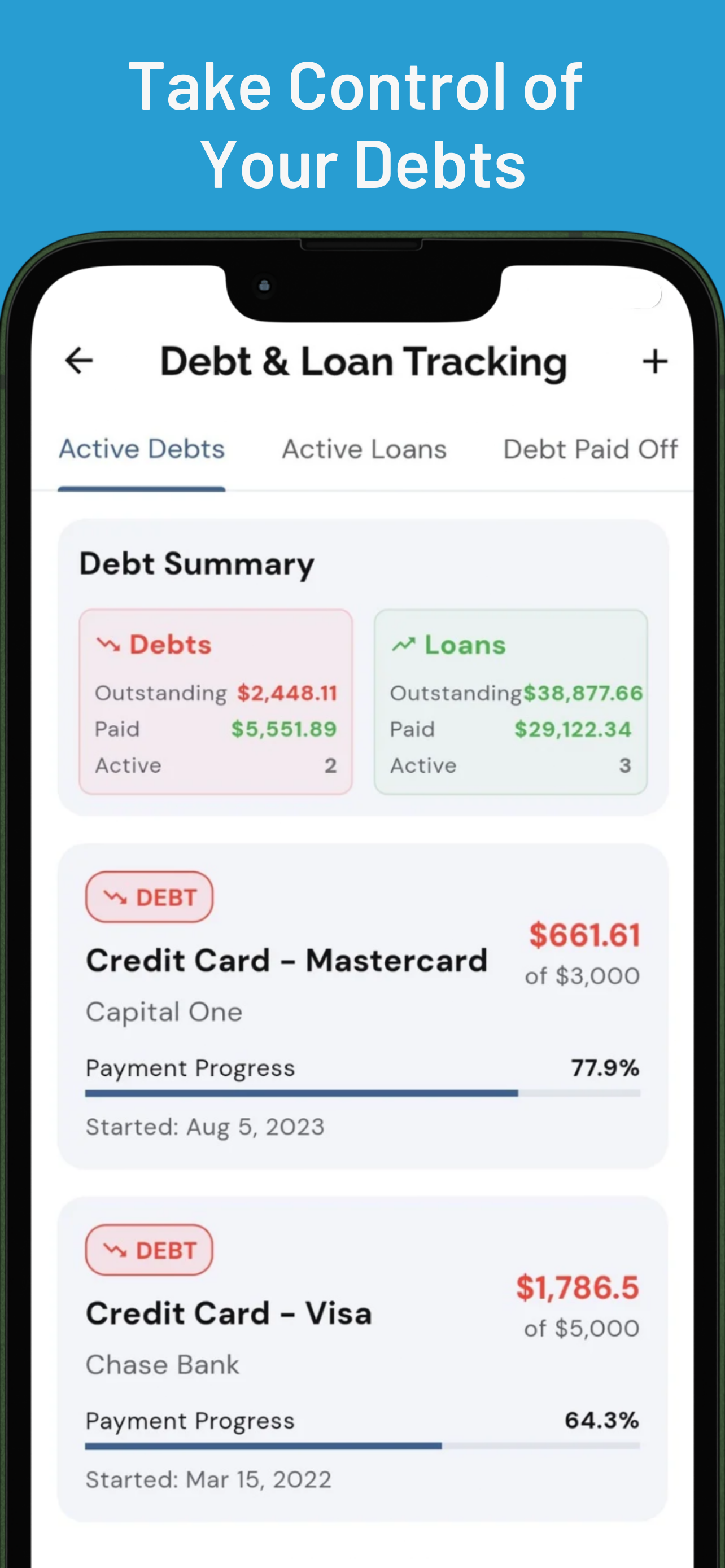
Neither works without visibility. You need, in one place:
- Every debt with its current outstanding balance
- The rate and minimum payment on each
- A payment history you can actually see progress in
That last one carries more weight than people expect. “77.9% paid off” is a very different feeling from a balance number that shrinks by an amount too small to notice. Progress you can see is what keeps extra payments happening.
Track loans out as well as debts in
If you’ve lent money to family or friends — extremely common, and rarely written down anywhere — track it in the same place. Money owed to you is part of your net position, and an unrecorded loan is one that quietly becomes a gift.
Duit tracks debts and loans side by side, with payment progress bars, full payment history, and outstanding totals — and every payment posts straight into your transaction ledger. Start tracking free.